
Approved Once Is Not Checked Today.
What is your business responsible for when contractors work on your energy sites, and what should you check before they start? This free 29-page eBook answers both, and shows what to keep.
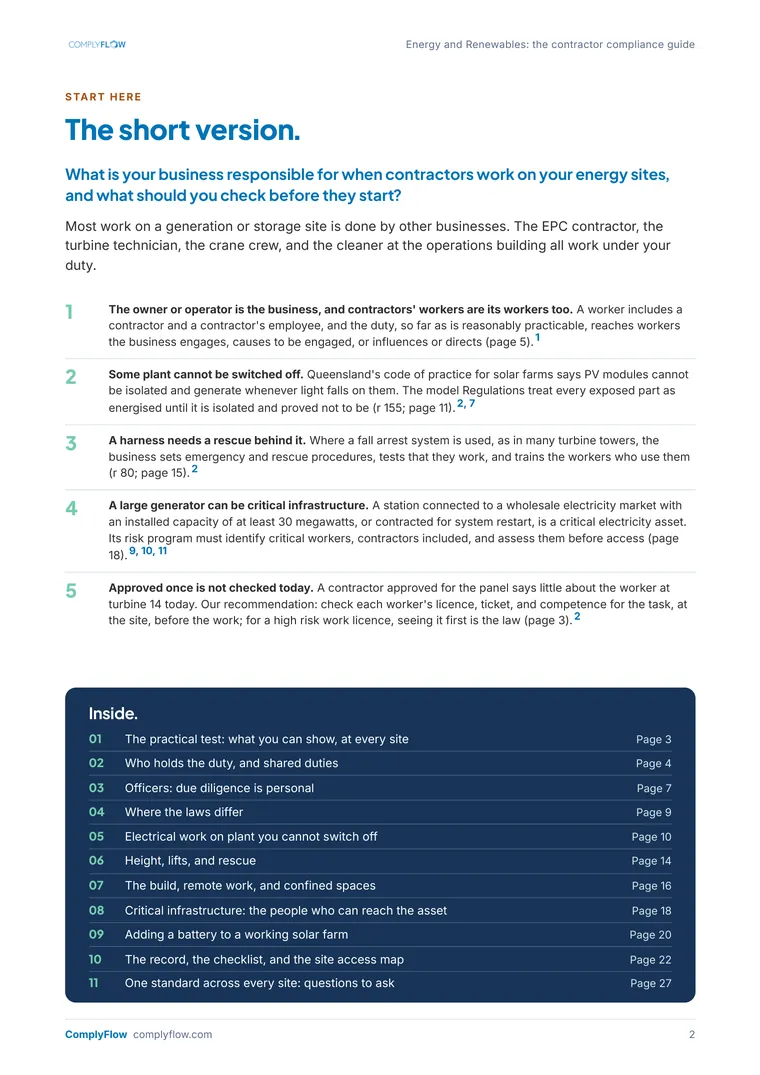
- 29 pages, PDF
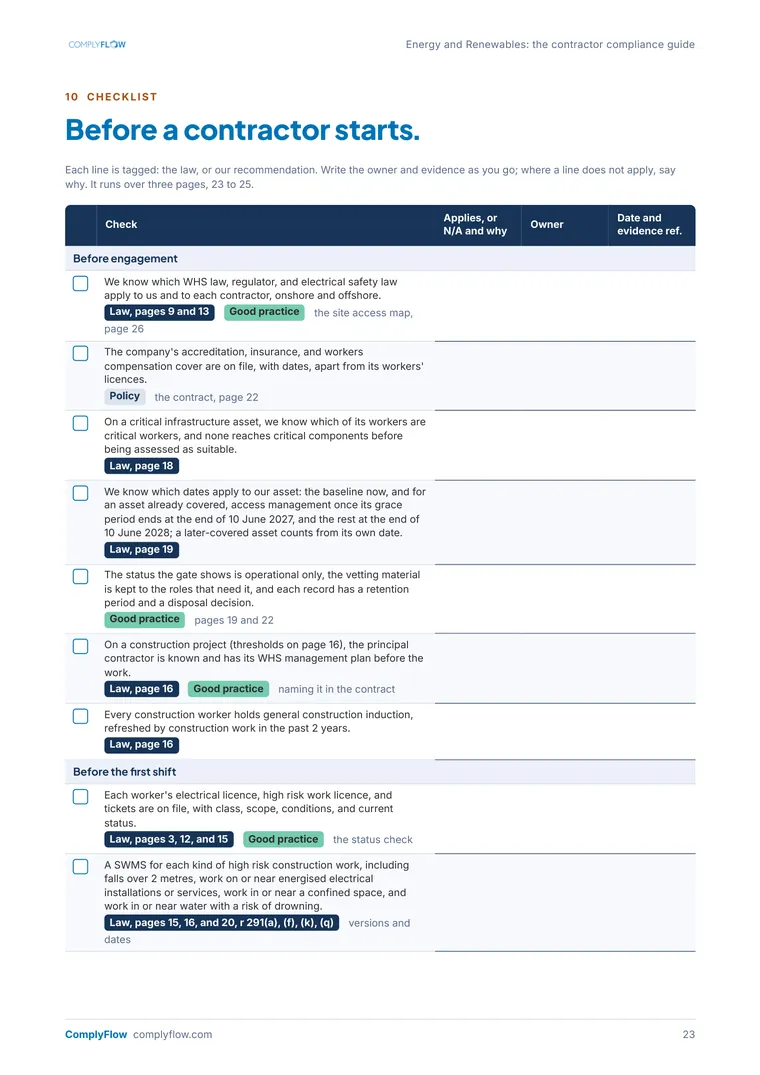
- 25-point checklist
- Current to November 2026
- Every source listed and dated
Download
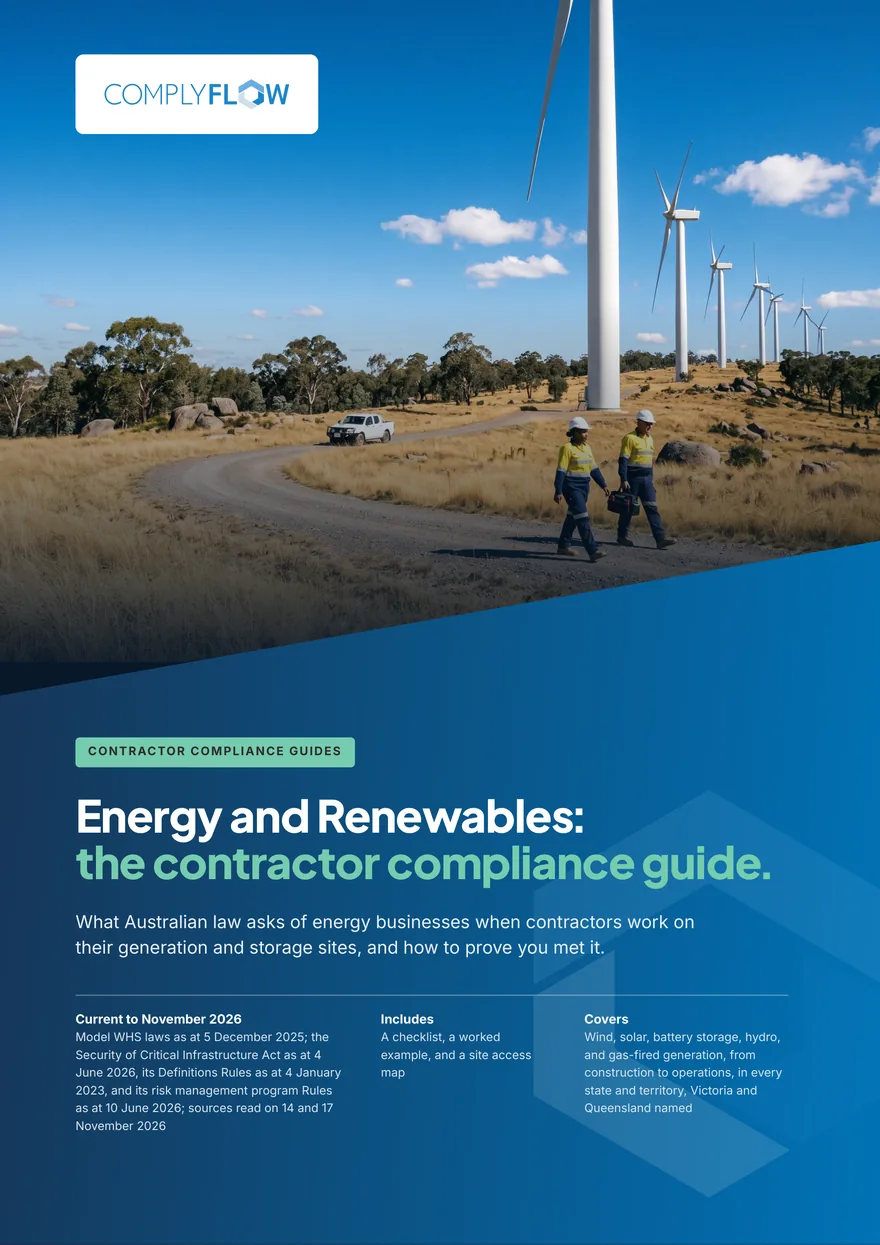
The Contractor Compliance Guide for Energy & Renewables.
The EPC contractor, the turbine technician, the crane crew, and the cleaner at the operations building all work under your duty. What Australian law asks of energy businesses when contractors work on their generation and storage sites, and how to prove you met it.
- Who holds the duty, with Victoria and Queensland named
- Electrical work, height and rescue, confined spaces, and critical infrastructure
- A 25-point checklist, a worked example, and a site access map
Free eBook
The Contractor Compliance Guide for Energy & Renewables
Four quick details, then the 29-page PDF downloads straight away.
ComplyFlow needs the contact information you provide to be able to give you access to the full resource, and will send you occasional emails about additional free tools and our services. You may unsubscribe from these communications at anytime. Privacy Policy.
Preview only: the live site shows HubSpot's form here. This button shows the thank-you without sending anything.
The form loads from HubSpot. If it does not appear, contact us and we will send you the eBook.
Thanks. Your eBook Is Downloading.
If it has not started, use the button. It is yours to keep and share.
Download the eBook (PDF)Then try it on your own contractors.
The Starter plan is free for up to 5 users and 5 sites. Or see the record the eBook describes in a demo.
What Is Inside
Eleven Chapters, From the Law to Every Site.
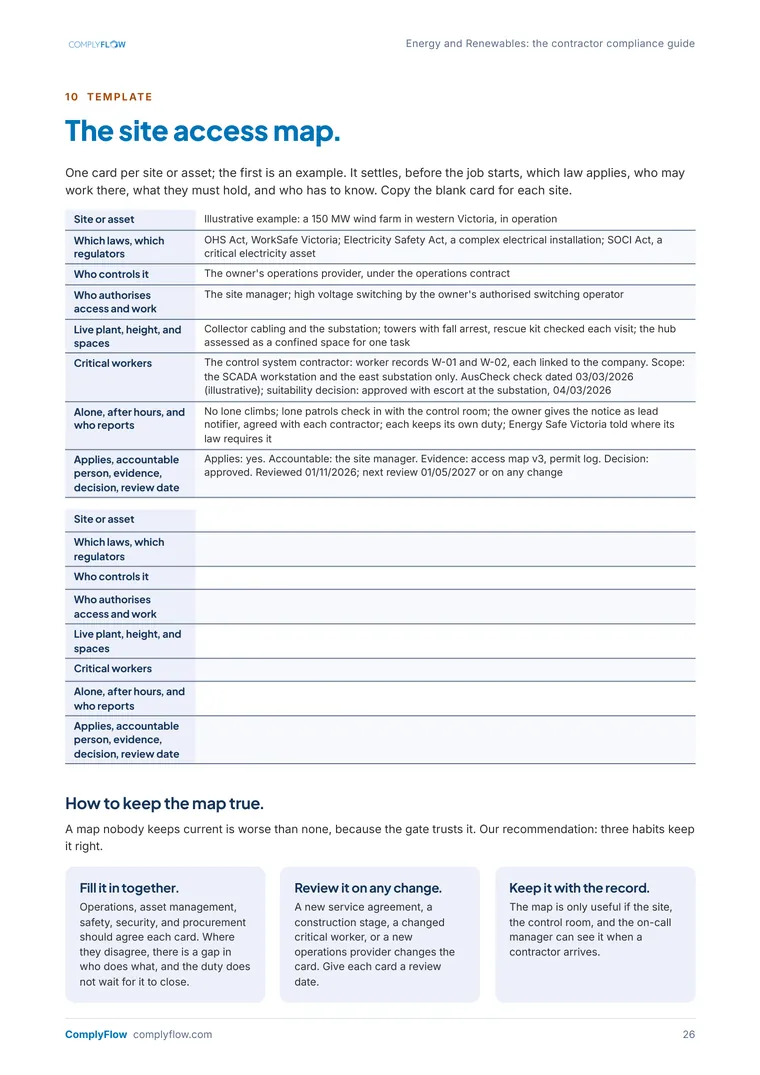
Written for the people who run generation and storage sites. Open a page to see it as it prints.
- 01The practical test: what you can show, at every site
- 02Who holds the duty, and shared duties
- 03Officers: due diligence is personal
- 04Where the laws differ
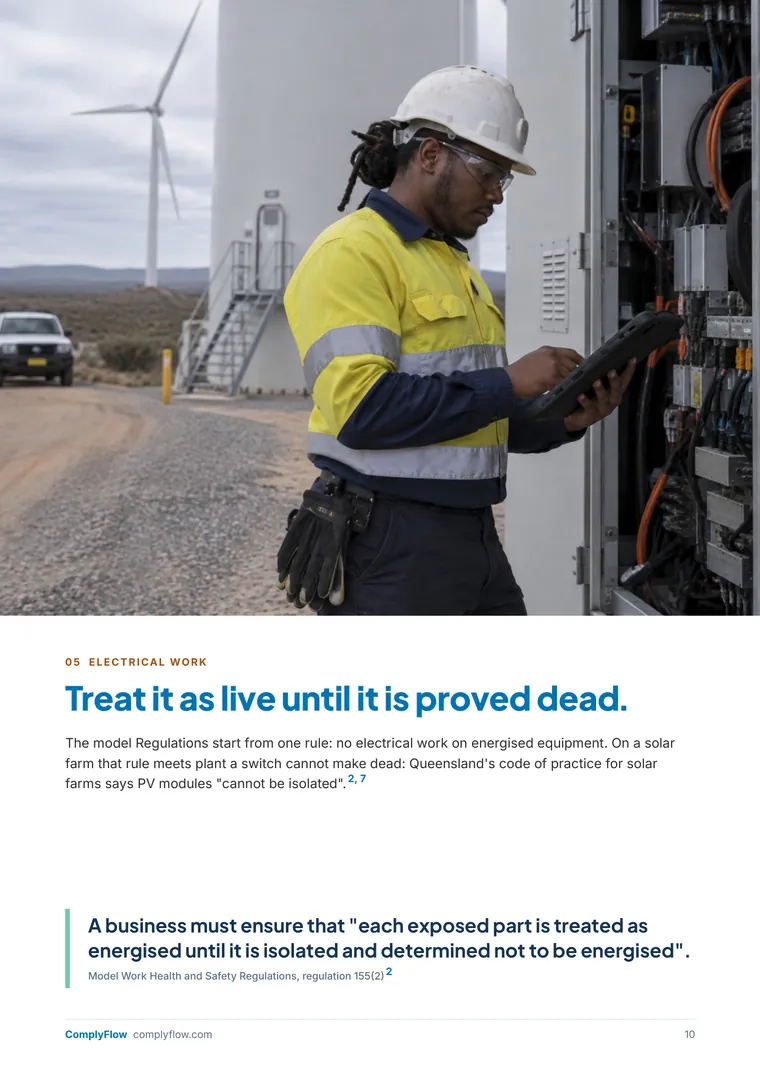
- 05Electrical work on plant you cannot switch off
- 06Height, lifts, and rescue
- 07The build, remote work, and confined spaces
- 08Critical infrastructure: the people who can reach the asset
- 09Adding a battery to a working solar farm
- 10The record, the checklist, and the site access map
- 11One standard across every site: questions to ask
Who It Is For
For the People Who Run the Sites & Their Contractors.
More than one business holds the same duty on one site. Each of these roles holds part of it.
-
Operations Manager
- Who may isolate which plant, and the handback.
- The site access map, site by site.
-
Safety & HSE Manager
- Electrical work on plant you cannot switch off.
- Height, rescue, remote work, and confined spaces.
-
Procurement & Contracts
- The licences and tickets to see before the work.
- The principal contractor on the build.
-
Risk & Compliance Manager
- Due diligence for officers, with Victoria and Queensland named.
- Critical workers on a critical electricity asset.
Customer Stories
How Teams Keep This Record on ComplyFlow.
 Transport & Logistics
Live access, digital prequalification, and lone Worker safety across unmanned sites.
Auckland Transport Read the story Airports & Ports
Closed an Enforceable Undertaking in six months, and helped build the platform that did it.
Qantas Read the story Property & Facilities Management
Automating internal and third-party audits and compliance management across the portfolio since 2011.
CBRE Read the story Education
Contractor management, document approvals, and workflow automation, integrated with the university’s Access ID system.
Australian Catholic University Read the story
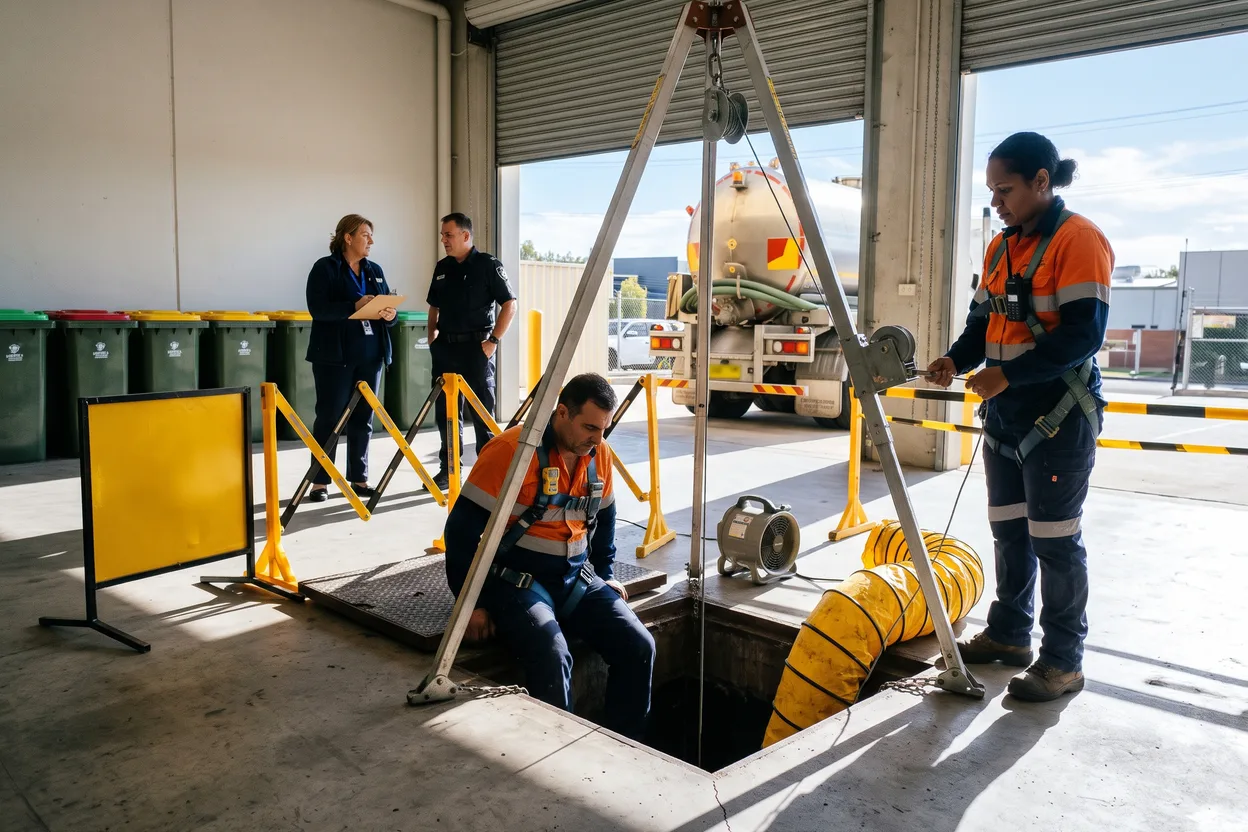

Contractor Compliance Guides
One Free Guide for Your Sector.
What Australian law asks of you when contractors work on your sites, the record to keep, and a checklist to start with. Written sector by sector. Free to download as a PDF.
- This Guide
Energy & Renewables
Get the Free Guide -
Transport & Logistics
Get the Free Guide -
Property & FM
Get the Free Guide -

Healthcare & Aged Care
Get the Free Guide -
Local Government
Get the Free Guide -
Education
Get the Free Guide -
State & Federal Government
Get the Free Guide -
Infrastructure Asset Management
Get the Free Guide -
Utilities
Get the Free Guide -
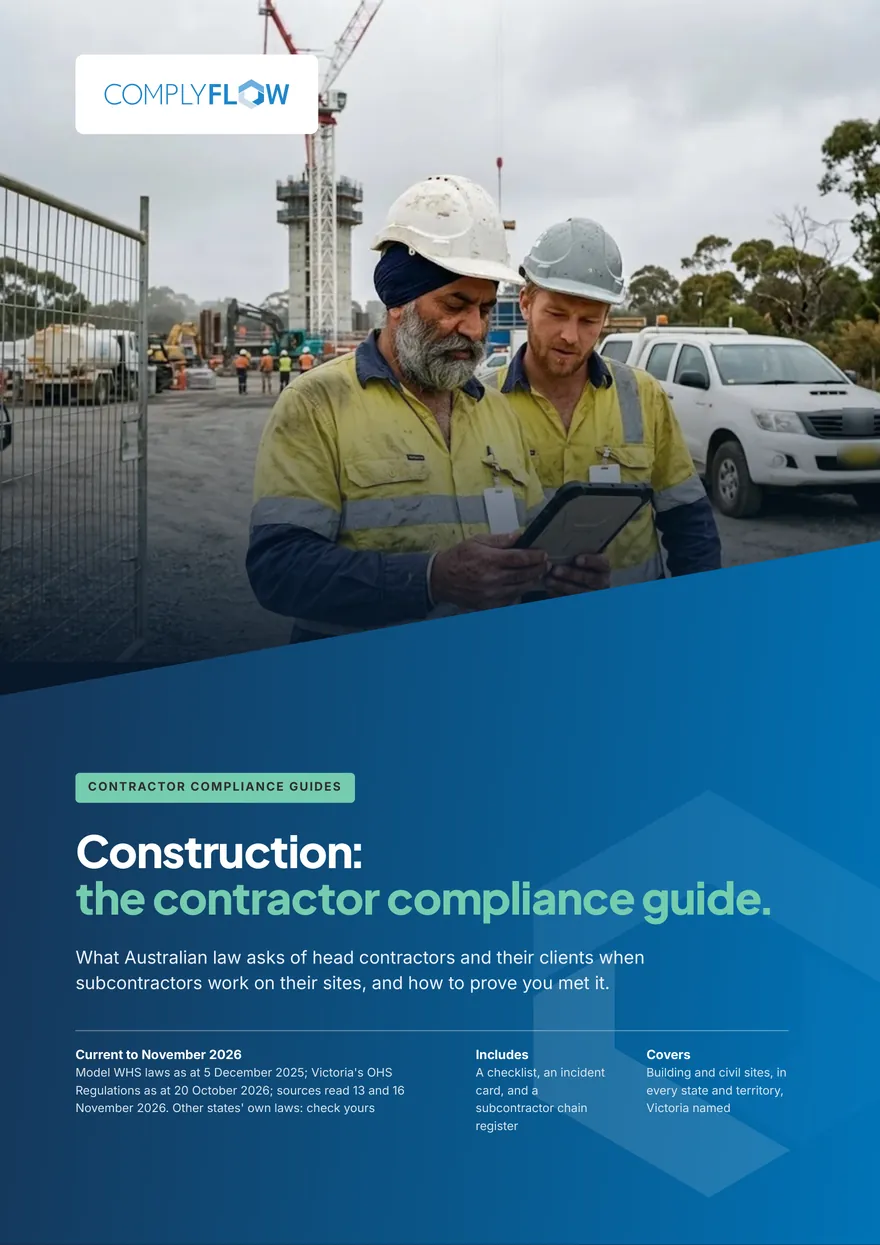
Construction
Get the Free Guide -
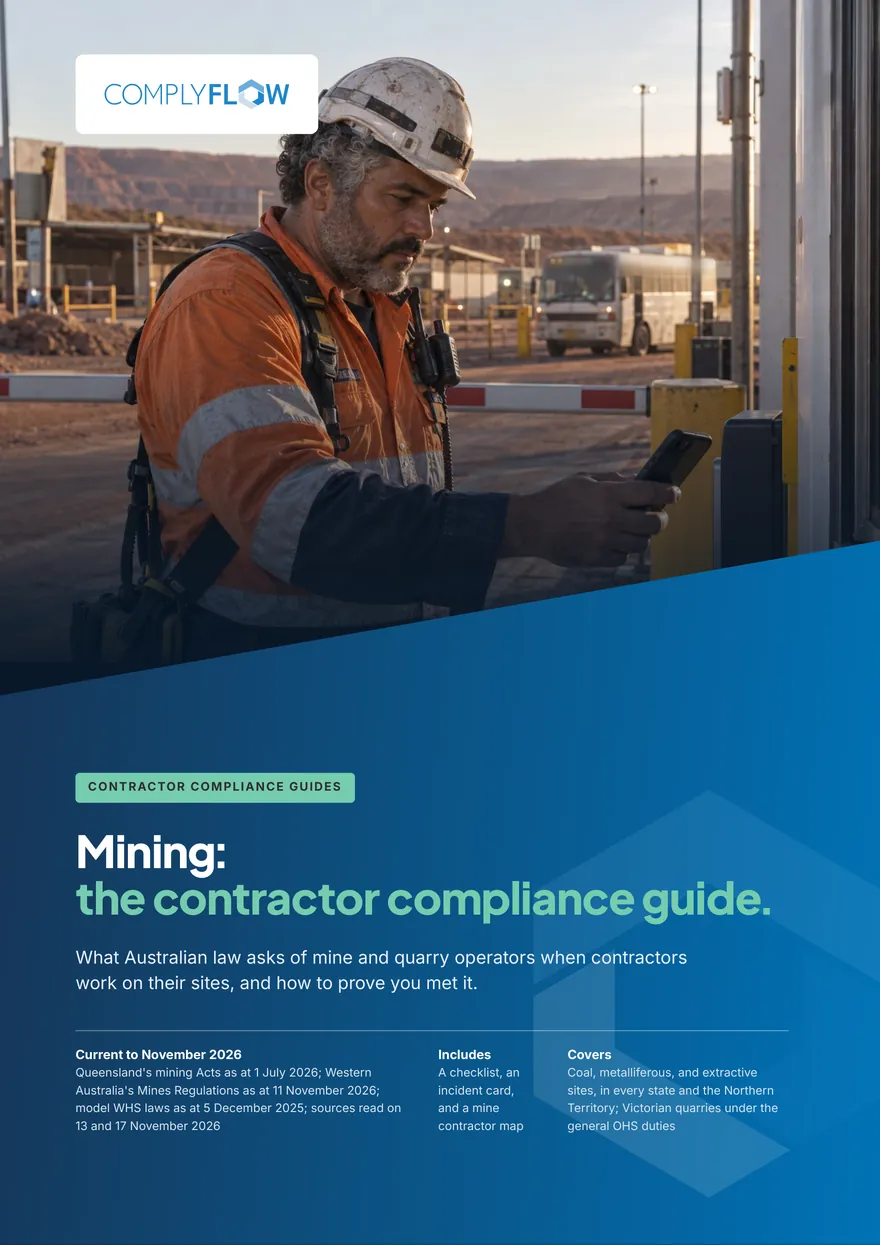
Mining
Get the Free Guide -

Manufacturing
Get the Free Guide -
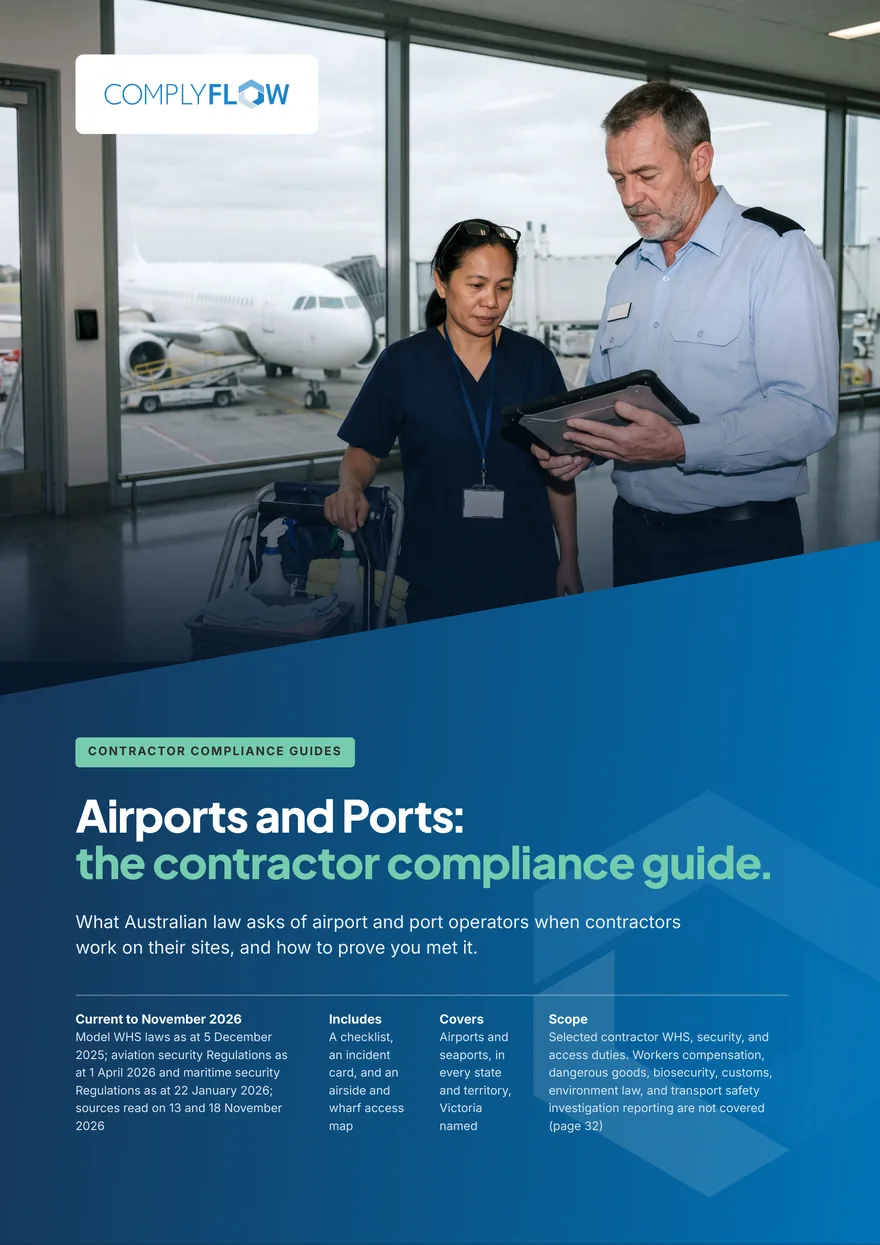
Airports & Ports
Get the Free Guide -
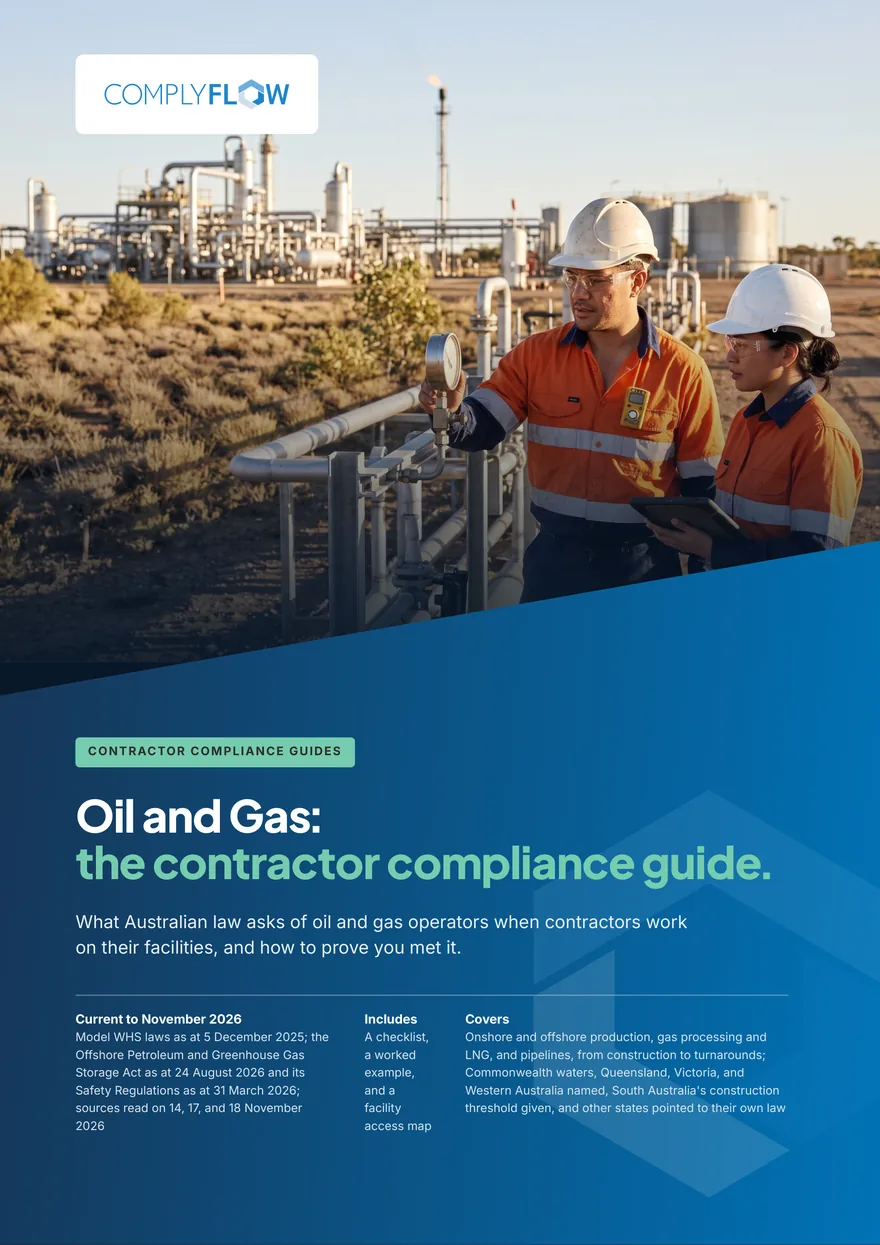
Oil & Gas
Get the Free Guide
Current to November 2026. Every source listed and dated. General information, not legal advice.
Questions
Questions People Ask About the eBook.
Who is the eBook for?
Owners and operators of wind, solar, battery storage, hydro, and gas-fired generation, from construction to operations, in every state and territory, with Victoria and Queensland named: the asset, safety, and contracts teams who engage contractors, and the officers who carry the due diligence duty.
Can a solar farm be switched off for electrical work?
Not all of it. Queensland's code of practice for solar farms says PV modules cannot be isolated and generate whenever light falls on them. The model Regulations treat every exposed part as energised until it is isolated and proved not to be.
Is a wind or solar farm critical infrastructure?
It can be. A station connected to a wholesale electricity market with an installed capacity of at least 30 megawatts, or contracted for system restart, is a critical electricity asset. Its risk program must identify critical workers, contractors included, and assess them before access.
Is the eBook free?
Yes. It is a 29-page PDF, free to download. Give us your name, company, and work email, and it downloads straight away.
Is this legal advice?
No. It is general information about the law as it stood when it was written, with every source listed and dated on the last page. For a decision about your own business, ask your own adviser.
How current is it?
It is current to November 2026. It follows the model WHS laws as at 5 December 2025, the Security of Critical Infrastructure Act as at 4 June 2026, its Definitions Rules as at 4 January 2023, and its risk management program Rules as at 10 June 2026; sources read 14 and 17 November 2026.
Check Once. Prove It at Every Site.
The eBook shows what to hold for every contractor and worker. ComplyFlow keeps it on one record, checked once and current at every site.
- ISO 27001 since 2019
- Sydney-based since 2009
- Data hosted on AWS in Australia