Best Contractor Management Software for Facilities Management (2026)
The best contractor management software for facilities management checks each trade against the requirements of the building it is about to work in, signs people in at every site, and connects to the CAFM that raises the job. We read 12 platforms' own sites between 28 and 30 September 2026 and put them in order of six tests met. ComplyFlow, our own product, meets all six on what its Help Centre confirms; LinkSafe, Rapid Global, and Sine meet five.
 Bart CrowtherDirector of Sales
 - Published
- Updated
- 18 min read
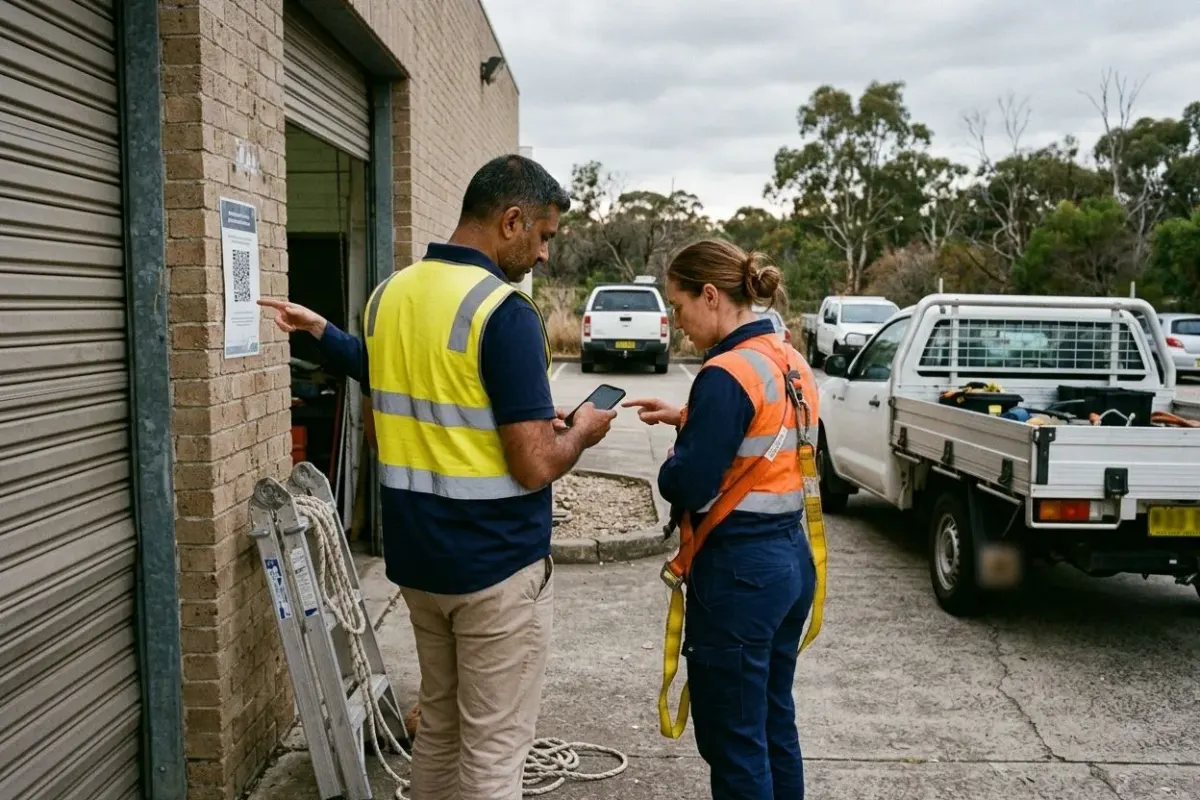
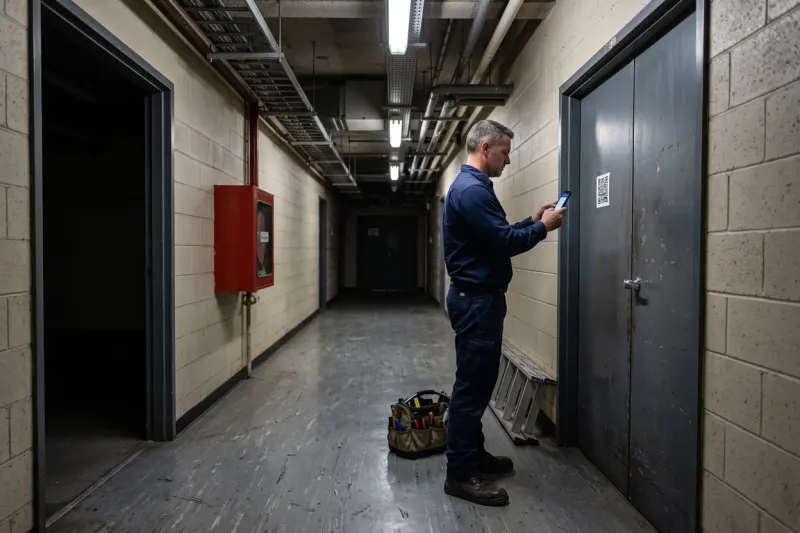
If you run facilities for a property portfolio, most of the people doing risky work in your buildings are employed by someone else. The HVAC technician, the fire services contractor, the lift mechanic, the cleaners, and the tenant's fit-out crew each carry their own insurance, licences, and inductions, and each of them turns up at a different building on a different day. This guide compares 12 contractor management platforms that facilities teams in Australia shortlist, judged against that job rather than against a construction site.
Every capability below was read off each vendor's own pages between 28 and 30 September 2026. ComplyFlow is our own product. It is scored on the same six tests as every other platform, and only on what its Help Centre confirms.
What Is Contractor Management Software for Facilities Management?
Contractor management software for facilities management checks the business and the people doing a job against the requirements of the building they are about to work in, before they start, and keeps the proof. It holds each contractor's insurance, licences, safe work method statements, and inductions, flags what is about to expire, and signs workers in and out of each site so you know who is in the building right now.
It is not the same thing as a CAFM or maintenance system. The CAFM raises the work order, schedules the preventative maintenance, and processes the invoice. Contractor management decides whether the person who arrives to do that work order is cleared to do it in that building. Most search results for this topic are lists of CAFM systems, which is why so many FM teams end up with a maintenance system that knows the job and a spreadsheet that knows the contractor. The better setups connect the two, and several platforms below say how. Our guide to what contractor management software has to do for facilities management covers the duties and the five tests for any demo in more depth.
Why Management or Control Keeps the Duty With the Building.
Under the model WHS laws, which apply everywhere except Victoria, a worker includes a contractor, a subcontractor, and a contractor's or subcontractor's employee.1 2 A business must ensure, so far as is reasonably practicable, the health and safety of the workers it engages or causes to be engaged, and of the workers whose activities it influences or directs, while the workers are at work in the business or undertaking.2 For an FM company, that is most of the people on site.
Buildings add a second duty. The person with management or control of a workplace must ensure, so far as is reasonably practicable, that the workplace, the means of entering and exiting it, and anything arising from it are without risks to the health and safety of any person.2 Safe Work Australia's own example names the building owner and the property manager as holding that duty for an office building.3 Under the model Act, where more than one person has a duty over the same matter, each must, so far as is reasonably practicable, consult, cooperate, and coordinate with the others.2 None of it can be contracted out to the contractor.4
Victoria runs its own Occupational Health and Safety Act 2004, and the idea is the same: whoever manages or controls a workplace must ensure, so far as is reasonably practicable, that it is safe and without risks to health, including the way in and out, for matters over which that person has management or control, and WorkSafe Victoria says that person can include the building owner and the property manager.5 6 So the software has to hold records about people who work for someone else, answer per building, and show who was told what.
How We Chose These Twelve.
We started from what Google returns in Australia for this search and for "contractor management software australia" on 30 September 2026, added the vendors in our contractor management software guide, and read each vendor's own pages the same day. One rule decides who is in, and it is the same rule on our transport and logistics list. A platform is in when all three hold:
- It is sold in Australia.
- Its own pages describe contractor prequalification or onboarding, with credentials tracked to expiry. A broad safety, inspection, or maintenance product is in when its contractor module is, so breadth is never a reason to leave a platform out.
- Its own site names property or facilities management, on an industry page or list, in a customer case study, or in an article.
Set aside under that rule: HammerTech and Procore, which are built for construction; MyPass Global, whose industries are mining and resources, energy and renewables, manufacturing, and utilities; Conserve, a managed service that names no industry on the pages we read; HSI Donesafe and WHS Monitor, neither of which lists property or facilities management among its industries on the pages we read; and maintenance systems that raise and track jobs but name no contractor checks. FMClarity stays in because its own pages name contractor vetting and work orders that stop when documents lapse. For carriers and distribution centres, see our contractor management software for transport and logistics list, where the same rule puts HSI Donesafe and WHS Monitor in.
Each platform is then scored against six tests, and a test is a Yes only when the vendor's own pages say so:
- Prequalifies contractors against requirements you set.
- Signs people in at each building, by QR code, kiosk, or phone.
- Issues permits to work for high-risk work.
- Names a connection to a CAFM or work order system.
- Names property or facilities management as an industry it serves, on an industry page or list. A case study or an article does not count for this test.
- Prints a price, or offers a free plan or a free trial.
The entries below run in order of tests met, most tests met first, with ties in alphabetical order. The order is computed from the table, not chosen. It is a tally of what each vendor's pages say, not a verdict: we wrote the tests, and our own product is scored too, so read the order as a starting point and each "Best for" line as the advice.
Capabilities come from each vendor's own pages. Two facts come from elsewhere and are labelled where they appear: the Mitti rename, reported by B&T on 11 August 2026, and Forsite's Australian launch, from Forsite's own press release distributed by PRWeb. The law is cited to its own source. No vendor's own statistics are repeated. Where we say a vendor names no feature, we mean we did not find it on the pages we read on 30 September 2026.
The Twelve at a Glance, With Sign-In and Permits.
| Platform | Prequalifies | Signs people in | Permits to work | CAFM link | Names property or FM | Price or trial | Tests met |
|---|---|---|---|---|---|---|---|
| ComplyFlow | Yes | Yes | Yes | Yes | Yes | Yes | 6 of 6 |
| LinkSafe, by Civica | Yes | Yes | Yes | Yes | Yes | No | 5 of 6 |
| Rapid Global | Yes | Yes | Yes | Yes | Yes | No | 5 of 6 |
| Sine, by Honeywell | Yes | Yes | Yes | No | Yes | Yes | 5 of 6 |
| Cm3 | Yes | Yes | Yes | No | Yes | No | 4 of 6 |
| Forsite | Yes | Yes | Yes | No | Yes | No | 4 of 6 |
| Ideagen Workforce Safety | Yes | Yes | Yes | No | Yes | No | 4 of 6 |
| Mitti, formerly SafetyCulture | Yes | No | Yes | No | Yes | Yes | 4 of 6 |
| Beakon | Yes | Yes | Yes | No | No | No | 3 of 6 |
| FMClarity | Yes | No | No | Yes | Yes | No | 3 of 6 |
| Avetta | Yes | Yes | No | No | No | No | 2 of 6 |
| Quartex | Yes | Yes | No | No | No | No | 2 of 6 |
Yes means the vendor's own pages say it, read on 28 to 30 September 2026. No means we did not find it on the pages we read.
The Twelve, in Order of Tests Met.
ComplyFlow.
Best for: an FM company or owner that wants one contractor standard across many buildings, extra requirements for particular sites, and the CAFM left to raise the job.
ComplyFlow is Contractor Management Software, and this is our own product. Document requirements can be assigned to a particular site, such as a high risk work licence for one building, and adding one updates every affected person's status to Documents Pending.7 Work orders can come in from myBuildings, matched to your contractors by ABN and to your buildings by site code, and status updates can go back.89 Each sign-in point has its own QR code and geofence, with the site induction when due and site documents such as an asbestos register shown as the last step.10 Permits to work are approved in Live Access.11 Its AI review scores an uploaded answer against criteria you set, and your people still decide.12 The Worker licence is AU$35 a year* per Worker, valid with every client on ComplyFlow.13 See what it does for property and FM.
Where it is not the answer. It is not a CAFM, so keep your maintenance system for scheduling and invoicing. If turnstiles or door locks must open only for cleared contractors, ask in the demo how your access control would connect; Rapid Global and Ideagen Workforce Safety both name building access control.
LinkSafe, by Civica.
Best for: an FM company that serves many clients, each with many sites and its own induction.
LinkSafe, now owned by Civica, has a page for facility management that describes client-specific and site-specific inductions once a contractor is prequalified, a preferred trades list, and an API that brings in asset and work order data so contractor attendance can be checked against invoices.14 Civica's product page names prequalification, inductions, credential management, sign-in, permits, visitor management, digital forms that work offline, and certified safety consultants who can run contractor onboarding and reviews for you.15
Where it is weaker. No price is published.
Rapid Global.
Best for: a portfolio where access has to be physical, through controlled doors or turnstiles, and cleared contractors have to be recognised at every building.
Rapid Global names facilities management as an industry, with contractor management, inductions tailored to each building, sign-in by QR code, kiosk, or mobile at every entry point, permits to work for hot work and working at heights, incident reporting, and scheduled inspections across the portfolio.16 It says entry is denied automatically if a contractor's induction or documents are not current, that a contractor inducted for one building is recognised wherever their requirements apply, and that its RapidCheck AI reviews and approves or rejects documents. It also names Rapid Monitor, which applies computer vision to existing cameras to spot blocked fire exits and after-hours access. It connects to facilities and work order systems including FMClarity, IBM Maximo, MEX, and Urbanise, by its own integration pages.17
Where it is weaker. It publishes no price.
Sine, by Honeywell.
Best for: a staffed commercial building where reception, visitors, tenants, and contractors all come through one front door.
Sine is part of Honeywell. Its contractor system automates inductions to contractors' devices before they arrive, holds insurance, licences, and certifications in a document hub, revokes site access when credentials lapse, and runs digital permits approved on a phone across multiple sites.18 Its facilities page adds visitor types with their own check-in flows and geofenced check-in for staff.19 It offers a 30-day free trial of its core plan, and asks portfolios of 20 or more buildings to request a quote.20
Where it is weaker. It is strongest at the door. Prequalification of the contractor business, the insurance and safety system behind the worker, is lighter on its site than on the platforms above, and it names no CAFM connection.
Cm3.
Best for: a property owner who wants contractors assessed by qualified people other than its own team.
Cm3 has a Property and Facility Management page naming risk reviews for working at height and hazardous materials such as asbestos and respirable crystalline silica, real-time status checks, work permits, and contactless visitor management.21 Its prequalification is a managed service: assessors review each contractor's own business risk profile against your requirements for insurance, licences, and known risks, with a lighter document check for low-risk contractors and insurance-only verification for suppliers who never come on site.22 Cm3 describes its status as a portable certificate a contractor can use with other clients.23
Where it is weaker. Its packages and pricing page is password-protected, and the assessment model suits a contractor base you want vetted to one external standard more than one where each building sets its own.
Forsite.
Best for: a mid-sized property portfolio that wants contractor sign-in and a live hazard register in one place.
Forsite is Auckland-based and announced it is bringing its platform to Australian property and facilities managers in July 2026.24 Its site names contractor and supplier management, site-specific inductions, a tablet kiosk at the entry, permits for high-risk work, incident investigations, critical control verification, and a hazard register that sites inherit from one organisational register.25
Where it is weaker. It is new to Australia, publishes no price, and names no CAFM or work order connection.
Ideagen Workforce Safety.
Best for: a property or FM owner that wants access control hardware, worker records, and permits on one platform.
Ideagen Workforce Safety says it tracks workers across all job sites, including contractors and vendors, so that everyone is approved with the correct permits to work.26 Its page names contractor certifications and compliance, permit to work, learning, training and inductions, fatigue management, and site access control that authenticates people before entry and integrates with turnstiles, gates, and door lock management.26 Ideagen lists facility management among the industries the platform serves, and says it is used by thousands of businesses across Australia and New Zealand.26
Where it is weaker. The page's own example is contractor mobilisation for large-scale infrastructure projects, it names no CAFM or work order connection, and it publishes no price.
Mitti, Formerly SafetyCulture.
Best for: a portfolio where the same inspection must be done the same way in hundreds of buildings.
SafetyCulture renamed itself Mitti, which B&T reported on 11 August 2026.27 Its facilities page names property inspections, fire checks, preventative maintenance, lone worker check-ins, and a check that every contractor is approved, trained, and holds the right credentials before they set foot on site.28 Its contractor module requests company documents, sets required credentials and site-specific inductions, and uses AI to review insurance certificates and recommend a decision.29 It publishes a free plan, per-seat plans at AU$24 and AU$29 a seat a month excluding taxes, and fixed pricing per location.30
Where it is weaker. Contractor management is one module of an inspection platform, it names no building sign-in on the pages we read, and it names no CAFM connection.
Beakon.
Best for: a retail or health portfolio that runs permits to work and contractor prequalification on one system.
Beakon's case studies include a client that owns and operates shopping centres across Australia and New Zealand, and public hospital networks managing contractors across their facilities.31 Its contractor module covers registration and prequalification, insurance, licences, safe work method statements, and online inductions and training.32
Where it is weaker. It has no facilities industry page, publishes no price, and names no CAFM connection.
FMClarity.
Best for: an FM team that wants contractor compliance checked inside the maintenance system that issues the work order.
FMClarity is a Melbourne-based CAFM built by facilities and property managers. It stores compliance documents and safe work method statements against each contractor's profile, stops work orders if compliance documents are invalid or expired, manages contractor prequalification, and integrates with contractor compliance providers, naming Rapid Global, Cm3, and LinkSafe.33
Where it is weaker. It is a CAFM first. It names no site sign-in or permit to work of its own, so the check sits on the work order, not at the door.
Avetta.
Best for: a global owner or tenant whose contractors are already prequalified on Avetta elsewhere in the world.
Avetta is a supplier prequalification network. It has had a Newcastle base since it bought Pegasus in July 2021, and opened a Sydney office in 2025.3435 Through the platform that began as Pegasus, whose supervisor app is Onsite Mobile by Avetta,36 it runs worker management, site-specific inductions, and kiosks and boom gates at sites.3738 Its Australian site names supplier qualification, audits, insurance monitoring, and worker management, and has published an article on the visibility gap in facilities management.39
Where it is weaker. Its Australian site has no facilities industry page, and it publishes no general price list; some client programs publish their own fees.
Quartex.
Best for: a property owner with many remote or unmanned sites that wants site access, onboarding, and licence checks in one workflow.
Quartex offers site access and onboarding for contractors, employees, volunteers, and visitors, with contractor prequalification, credential and licence management, expiry management, and electronic sign-in, including QR codes for unmanned locations.40 One of its case studies is DIT Property, a property portfolio across South Australia, including its most remote regions, that manages its access requirements centrally from Adelaide.40
Where it is weaker. It has no facilities industry page that we found, names no permit to work or CAFM connection, and publishes no price or trial.
Worked Example: A Roofer's Permit at a 1990s Shopping Centre.
An FM company manages a 1996 neighbourhood shopping centre for one owner and three office buildings for another. A roofing contractor is booked to replace box gutters on the centre over two nights, working at height, with a supermarket, eight specialty shops, and a night cleaning contractor below.
Because the centre was built before 2004, under the model Work Health and Safety Regulations the person with management or control must keep an asbestos register, and if the roofers' work carries a risk of exposure to airborne asbestos, the roofing business must be given a copy.41 If any part of the job needs a high risk work licence, the business directing or allowing it must see written evidence of the licence, provided by the worker, first.41 The owner of the centre wants its own working-at-height evidence; the office owner does not.
Run it through each kind of system. A prequalification service such as Cm3 answers whether the roofing business meets a standard. A sign-in platform such as Sine answers who arrived tonight. A CAFM such as FMClarity answers whether the work order should be issued. What the facilities manager needs on Monday is all of it on one record: the roofing business was cleared against this owner's extra requirement, each roofer was inducted to this centre, signed in on both nights, and was shown the register at sign-in, the permit for work at height was issued and closed, and the tenants and cleaners were told before the first night.
That last step is the one paper loses. Safe Work Australia's own lift maintenance example has the property manager consulting the contractor, the tenants, and the cleaning contractor before the work starts.3 A platform that holds sign-in and site documents per building can show who saw what. A spreadsheet cannot.
Should Contractor Management Sit Inside Your CAFM?
Usually not, but it should be connected to it. A CAFM is built around the asset and the job; contractor management is built around the business, the worker, and the building's own requirements. FMClarity shows the inside-the-CAFM approach done properly: documents against the contractor, and a work order that stops when they lapse.33 What it does not do on its own site is sign the worker in at the building. Of the 12 platforms, only FMClarity, LinkSafe, Rapid Global, and our own product name a CAFM or work order connection on their own pages.
The connected approach runs the other way. LinkSafe brings work order data in by API to match attendance against invoices.14 ComplyFlow imports work orders from myBuildings and links each one to the contractor by ABN and to the building by site code.9 Either way, the test is simple: raise a job in your CAFM for a contractor whose insurance lapsed yesterday, and see what happens at the door.
What Does Contractor Management Software Cost for a Property Portfolio?
Few vendors in this list publish a price. Mitti publishes per-seat plans at AU$24 and AU$29 a seat a month, and per-location plans.30 Sine publishes plan tiers and a 30-day trial, and quotes portfolios of 20 or more buildings.20 Cm3's pricing page is password-protected.42 Everyone else asks you to talk to sales.
What drives the quote for property is the number of buildings, the number of contractor businesses and workers who sign in each year, and whether someone else's assessors do the reviewing. A managed assessment service, such as Cm3's or LinkSafe's consultants, saves your team's time and is part of the price.
ComplyFlow publishes its Worker licence, AU$35 a year* per Worker, valid with every client on ComplyFlow, and quotes the platform itself.13 Before comparing quotes, count the buildings and the contractor workers who signed in to them last year. Those two numbers decide more of the cost than any feature.
How to Choose, in One Demo.
Book every shortlisted platform through the same demo, using one of your own jobs, such as the roofer above. Ask the vendor to run it live:
- Prequalify one contractor against our standard, then add an extra requirement for one building only, and show who it affects.
- Sign a worker in at an unstaffed building by QR code, and show what happens if their insurance lapsed yesterday.
- Show the building's asbestos register at sign-in, and prove afterwards who saw it.
- Issue and close a permit for work at height, tied to that worker.
- Raise the job in our CAFM and show it arriving, matched to the contractor and the building.
- Show how the tenants' contractors are cleared through the same process.
- Tell us who counts as a paid user: our staff, contractor workers, or visitors.
- Ask every vendor, ComplyFlow included, whether its prequalification and worker products share one implementation and one onboarding.
The facilities role page, the procurement role page, and the contractor prequalification page show the same questions from the FM and buying sides, and the site access page shows the sign-in. If your portfolio's biggest WHS risks sit with your own staff rather than contractors, our guide to choosing WHS compliance software in Australia is the better starting point.
Sources
- Legislation
- Model Work Health and Safety Act
- Model Code of Practice: WHS consultation, cooperation and coordination
- WHS duties in a contractual chain
- Summary of the OHS Act 2004: general OHS duties
- General duties relating to health and safety
- Compliance requirements, training requirements and site contact
- Work order settings and data integration
- How work orders are matched with suppliers
- Live Access sign-in options: confirmation sets, site inductions and site documents
- Area supervisors guides: approving permits via Live Access
- Quick start guide: how users experience AI review
- One account, every client
- Facility contractor management software solutions
- LinkSafe by Civica
- Safety and compliance for facilities
- FMClarity and Rapid
- Contractor management
- Visitor and contractor management for facilities
- Pricing
- Property and facility management
- Contractor prequalification
- Cm3 contractor management system
- Australian commercial property and facilities managers finally have a better, more cost-effective way to manage contractors and compliance
- Forsite home page
- Ideagen Workforce Safety
- SafetyCulture rebrands to Mitti
- Facilities management
- Contractor management
- Pricing
- Case studies
- Contractor management software
- Features
- Avetta Acquisition of Australian Worker Management Company Pegasus Completed
- Avetta invests in local growth with new offices in Sydney and Newcastle
- Workforce visibility on site
- Worker Management
- Access Control (Pegasus knowledge base)
- Avetta Australia
- Site access and onboarding
- Model Work Health and Safety Regulations
- Packages and pricing
See It Against Your Own Contractors, Sites & Rules.
Book a 30-minute demo. We will show ComplyFlow working with your kind of sites, your kind of contractors, and your requirements. No slides, no hard sell.
Or Speak to Us
- ISO 27001
- Hosted on AWS
- Microsoft & Okta SSO
- API & MCP
- Data in Australia
Written by
Bart CrowtherDirector of Sales, ComplyFlow
Bart leads sales at ComplyFlow and spends his week with the safety, procurement, and facilities teams deciding how to manage contractors. He writes about what buyers ask, and what separates a system that gets used from one that gets ignored.
Writes about: Choosing a compliance system, Rollout and adoption, What buyers ask
Questions
Questions People Ask About This.
Is a CAFM system enough for contractor compliance?
Usually not on its own. A CAFM such as FMClarity can store a contractor's documents and stop a work order when they lapse, but it does not sign the worker in at the building or show them the site's asbestos register. Most FM teams connect a contractor platform to the CAFM rather than choosing one.
Do tenants' contractors have to go through our contractor system?
Under the model WHS laws, tenants, owners, and managers can each hold duties for the same building, and each must consult, cooperate, and coordinate with the others so far as is reasonably practicable. Victoria's OHS Act has no general equivalent. Putting tenants' trades through the same sign-in and building requirements as your own panel gives one record of who is in the building and what they were shown.
Do we need physical access control, like turnstiles?
Only where the building already controls entry that way. Rapid Global names building access control that denies entry when an induction or document is not current, Ideagen Workforce Safety integrates with turnstiles, gates, and door lock management, and Sine names access control and badges. Most portfolios start with QR sign-in at each entry and add door control at the buildings that have it.
Do contractors have to see the building's asbestos register?
Under the model WHS Regulations, the register must be readily accessible to a worker who has carried out, carries out, or intends to carry out work at the workplace, to that worker's health and safety representative, and to any person conducting a business or undertaking that carries out or intends to carry out work there, and a business whose work involves a risk of exposure to airborne asbestos must be given a copy. Showing the register at sign-in, and keeping a record of who saw it, is one way to prove both.
Which contractor management software names facilities management?
On their own sites, read 30 September 2026: Rapid Global, LinkSafe, Cm3, ComplyFlow, Forsite, Sine, Mitti, FMClarity, and Ideagen Workforce Safety. Beakon and Quartex show property or shopping centre case studies, and Avetta has published an article on facilities management.
How was this list put together?
Every capability was read off each vendor's own pages between 28 and 30 September 2026. The platforms are in order of six tests met, most first, ties alphabetical. No vendor's own statistics are repeated. ComplyFlow is our own product; its features are scored only on what its Help Centre confirms.