Best Incident Management Software in Australia (2026)
The best incident management software in Australia depends on who the incident usually involves. We read 12 platforms off their own sites and put them in order of five tests met. ComplyFlow, our own product, meets all 5; Mitti and WHS Monitor meet 4. Beakon, HSI Donesafe, Rapid Global, RiskWare, Safety Champion, and Sentrient meet 3.
 Bart CrowtherDirector of Sales
 - Published
- Updated
- 17 min read

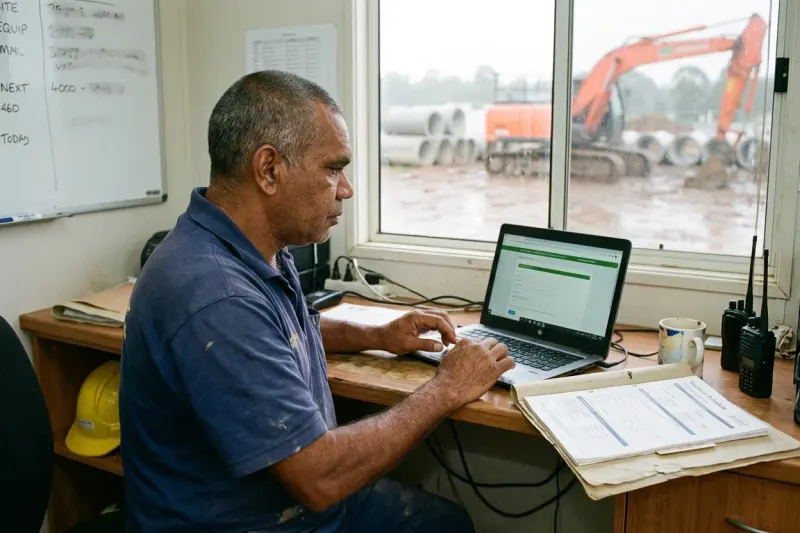
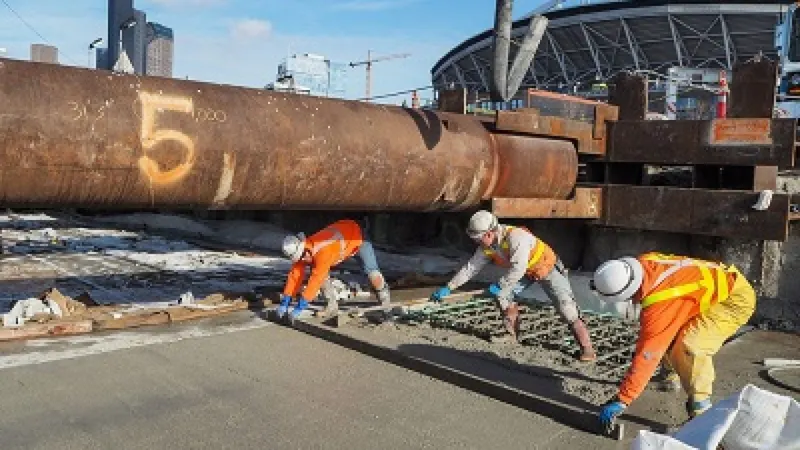
The incident that decides whether your software was worth buying rarely happens at 10am on a Tuesday. It happens on the night shift, on a site with patchy phone coverage, and it usually involves someone you do not employ: a labour-hire operator, a visiting contractor, a maintenance crew. This guide compares 12 incident management platforms sold in Australia against that night.
Every capability below was read off each vendor's own website on 28 September 2026, except ComplyFlow's own pages, read on 30 September 2026. ComplyFlow is our own product. It is scored on the same five tests as every other platform.
What Is Incident Management Software?
Incident management software records a workplace safety event at the moment it happens, tells the right people, runs the investigation, raises the corrective actions, and keeps the record you will need if a regulator, an insurer, or a court asks later. On a worksite that means a supervisor reporting from a phone on the spot, not a form typed up at the end of the week from memory.
Safety Incidents, Not IT Service Desk Tickets.
It is worth being precise, because the phrase means two different things. If you asked an AI assistant for the best incident management software and got ServiceNow, Jira Service Management, and PagerDuty, you were given IT service desk tools. They manage system outages, not a crushed foot. Everything in this guide is the safety kind.
The better platforms do four jobs well: capture at the point of the incident, a clear path for anything that may be notifiable, investigation with actions that have owners and due dates, and reporting that shows the same hazard recurring across sites. The difference between them is mostly in the second and third jobs, and in how much each knows about the person involved before the incident is reported.
What Counts as Notifiable in 2026.
Under the WHS laws, a person conducting a business or undertaking must notify its regulator immediately after becoming aware of a death, a serious injury or illness, or a dangerous incident.1 Victoria has its own OHS Act and its own rules. In New South Wales the notice goes by the fastest possible means, by phone or in writing, and the regulator can ask for a written notice within 48 hours of a phone call.2 The record of each notifiable incident is kept for at least 5 years from the day notice is given.2
The list of dangerous incidents is where any business that runs vehicles or mobile plant should pay attention. The New South Wales Act in force from 1 July 2026 covers, among others, the fall or release from a height of any plant, substance, or thing, and the collapse or partial collapse of a structure. It has no separate item for mobile plant.3
That is changing. In December 2025 Safe Work Australia published amendments to the model WHS Act that extend notification to dangerous incidents involving mobile plant and falls, violent incidents, work-related suicide and attempted suicide, and extended worker absences of 15 or more calendar days.1 Under the amended model Act, mobile plant means plant designed to move or be moved, and a mobile plant incident includes plant that overturns, collides with a person or thing, pins a person, ejects a person, malfunctions, or moves while not under control. It is notifiable where it immediately or imminently exposes a person to a serious risk to health or safety.4 An extended absence is notified within 14 days of becoming aware of it.4
None of this applies until your state or territory adopts it, and each sets its own timeline; the ACT adopted the mobile plant, serious fall, and wider serious injury definitions from 19 November 2025. Safe Work Australia's advice is to check with your regulator before changing your notification systems.1 For software, that means the "is this notifiable?" step has to be something you can change yourself, per jurisdiction, on the day your state moves. A platform that hard-codes one definition will be wrong somewhere in your network within the year.
How We Chose and Ordered These Twelve.
We started from the platforms that Google and the three main AI assistants returned for this search in Australia, measured on 24 September 2026. We added Mitti, which the same assistants name first for WHS and EHS software, and our own product. Two that were returned, IncidentReport.com.au and BRUCE from Resilient Services, were not assessed. We read each one's own website on 28 September 2026 and scored it against five tests of what a safety or operations manager needs on the night. A test is a Yes only when the vendor's own pages say so.
- Reports from a phone: its pages say incidents can be reported from a phone, tablet, or mobile app.
- Knows the person: its pages describe holding records for contractors or labour-hire workers, such as licences, induction, sign-in, or employer, that an incident can attach to.
- Has a notifiable step: its pages name a step, question, or workflow for incidents that may be notifiable to a regulator, or say the platform records notifiable incidents. A list of the employer's own legal duties does not count.
- Investigates and closes actions: its pages describe investigations and corrective actions tracked until closed.
- Price or trial: it prints a price, or offers a free plan or a free trial.
The entries below run in order of tests met, most tests met first, with ties in alphabetical order, computed from the table. It is a tally of what each vendor's pages say, not a verdict: we wrote the tests, and we make ComplyFlow, so read the order as a starting point and each "Best for" line as the advice.
Capabilities come from each vendor's own pages. One fact comes from elsewhere and is labelled where it appears: the Mitti rename, reported by B&T on 11 August 2026. The law is cited to its own source. No vendor's own statistics are repeated. Where we say a vendor names no feature, we mean we did not find it on the pages we read.
Two well-known names are not here. LinkSafe, now sold by Civica, names pre-qualification, induction, credentials, site management, permits, visitor management, and digital forms on its product page, but not incident management.5 Enterprise EHS suites such as Intelex and Cority are compared in our top 10 EHS software for Australian enterprises, because they are bought as a whole system, not for incidents alone.
The Twelve at a Glance, Scored on Five Tests.
| Platform | Phone | Knows the person | Notifiable step | Investigates and closes | Price or trial | Tests met |
|---|---|---|---|---|---|---|
| ComplyFlow | Yes | Yes | Yes | Yes | Yes | 5 of 5 |
| Mitti, formerly SafetyCulture | Yes | Yes | No | Yes | Yes | 4 of 5 |
| WHS Monitor | Yes | Yes | No | Yes | Yes | 4 of 5 |
| Beakon | No | Yes | No | Yes | Yes | 3 of 5 |
| HSI Donesafe | Yes | Yes | No | Yes | No | 3 of 5 |
| Rapid Global | Yes | Yes | No | Yes | No | 3 of 5 |
| RiskWare | Yes | Yes | No | Yes | No | 3 of 5 |
| Safety Champion | Yes | Yes | No | Yes | No | 3 of 5 |
| Sentrient | Yes | No | Yes | Yes | No | 3 of 5 |
| Noggin | No | Yes | No | Yes | No | 2 of 5 |
| Riskonnect, formerly Camms | No | Yes | No | Yes | No | 2 of 5 |
| MiSAFE Solutions | No | No | No | No | Yes | 1 of 5 |
Yes means the vendor's own pages say it. No means we did not find it on the pages we read.
The Twelve, in Order of Tests Met.
ComplyFlow.
Best for: an operation where the incident usually involves someone you do not employ: a labour-hire operator, a contractor, a driver from another business, or a visitor.
ComplyFlow is Contractor Management Software, and this is our own product. Its incident module sits beside contractor prequalification, worker inductions and licences, and site sign-in, so the records are in the same system when an incident involves a contractor's worker. Incidents can be reported from a phone. At the gate, a kiosk checks a mobile number against staff and contractor records and notifies the host, so the person's name and company are already on file.6 Contractors can be allowed to report their own incidents, and the record shows whether a report came from you or from them.7 Incident types are your own, from near miss and hazard to environmental damage and property damage.8 Switch on the potentially notifiable workflow and the reporter is asked straight away; if yes, the incident is restricted to a security group, such as legal, which is emailed with the reporter's name and phone number.910 An incident sits at Pending Actions until every corrective action is closed or marked not required.11 See the incident management module for the rest.
Where it is not the answer. It is not a fleet system, so if road incidents are your main concern, Mitti and WHS Monitor name fleet and vehicle tools. It does not lodge the notice with the regulator; it gets the right people told at once, and they notify.
Mitti, Formerly SafetyCulture.
Best for: a large, spread-out workforce where the priority is getting frontline people to report at all.
SafetyCulture renamed itself Mitti on 11 August 2026, which B&T reported, so if a shortlist says SafetyCulture, this is the same product.12 Its issue reporting captures hazards, incidents, and near misses, and a QR code on site lets contractors, visitors, and frontline workers report from their own phones; investigations link issues, inspections, and media to find root causes.13 Its transport and logistics page covers fleet GPS, vehicle inspections, and telematics.14
Where it is weaker. We found no notifiable-incident workflow in the pages we read. Its published price is AU$24 a seat a month on annual billing, with a location-based option at one price per site and free guest seats listed among its plan features.15 For a casual and labour-hire workforce, ask which of those models fits, and whether contractors reporting by QR code count as seats.
WHS Monitor.
Best for: a business that wants fleet, plant, and incidents on one Australian system.
WHS Monitor names transport, logistics, and warehousing as one industry, with Chain of Responsibility assessments from templates with electronic signing, and an asset register that includes vehicles and trucks.16 Incidents can be reported on any device, including a desktop, tablet, or mobile, or by tapping or scanning a Q-Tap label at the location; corrective actions are created from the report, and automated notifications go to the relevant staff.1716 A claims module tracks return to work.17 It also runs contractor prequalification.
Where it is weaker. Its incident page does not name a notifiable-incident path. Its AI claims are positioning on the homepage rather than a described feature, and the only integration we found named on its own site is Zapier. No price is published, though it offers a 14-day free trial.
Beakon.
Best for: a large operator that runs permits to work and wants incidents on the same platform.
Beakon lists DHL, Ampol, and CHEP Brambles among its case studies; in the DHL study the platform is used for random vehicle safety audits against Chain of Responsibility.18 Its incident module starts with first responder reporting and a built-in risk matrix, then investigation and corrective actions, workflow, SMS, and email notifications, and lost time calculators and trackers for return to work.19 It also names permits to work, contractor prequalification, and visitor sign-in.
Where it is weaker. No notifiable-incident step is described, no price is published, and its site offers a Try for Free button without stating the terms.
HSI Donesafe.
Best for: a business that wants one EHS system covering incidents, environment, chemicals, and psychosocial hazards.
HSI Donesafe names transportation and logistics among 20 industries, with offices in Sydney, Perth, Melbourne, Brisbane, and Adelaide.20 Its EHS solutions page names incident reporting and investigations, audits, risk and compliance, chemical and SDS management, environmental management including carbon emissions, psychosocial management aligned to ISO 45003, and asset management; it states the platform works on all devices, online and offline.21 Its module overview lists incident tracking, investigation, and corrective actions.22 Contractors can log their own incidents and hazards.
Where it is weaker. It names no notifiable-incident step in the copy we read, no AI feature is named on its site, and no price is published.
Rapid Global.
Best for: a site where contractors and drivers already sign in through Rapid, and the incident should land where they did.
Rapid Global names transport, with driver licence and accreditation checks, vehicle sign-in with number plate recognition, audits of vehicles and depots, corrective actions tracked to completion, and Chain of Responsibility evidence.23 Its incident reporting is mobile hazard and breach reporting, and its homepage names six AI features, including AI-enabled incident reporting and RapidCheck document verification.24
Where it is weaker. It names no notifiable-incident step on the pages we read, and no price is published.
RiskWare.
Best for: an organisation that wants incidents inside an enterprise risk and GRC program, with psychosocial reporting.
Melbourne-based RiskWare covers injury and near-miss reporting from its mobile app, investigations using 5-whys and ICAM, and corrective and preventive actions, alongside risk, audit, and compliance modules.25 It also names psychosocial incident reporting.
Where it is weaker. It names no permit-to-work, fleet, or visitor sign-in module, and no price is published.
Safety Champion.
Best for: a mid-market business with several sites that wants a straightforward safety system its supervisors will actually use.
Safety Champion names transport and logistics, and warehousing, as industries it serves.26 Incidents are reported from a PC or its iOS and Android apps, then investigated with actions tracked to resolution, and stakeholders are notified from the form.27 Its site attendance register signs employees, contractors, and visitors in and out by QR code, with offline access, which matters on a site with patchy coverage.28 It also names contractor management, training and licences, and asset and equipment management covering fleet and plant.
Where it is weaker. The incident page we read does not describe a notifiable-incident workflow. No price is published.
Sentrient.
Best for: a small team that wants incident reporting inside an HR, training, and compliance system.
Melbourne-based Sentrient records accidents, injuries, near misses, hazards, and conduct breaches from the office or the field, with photos, witness details, follow-up tasks, and an audit history, and says it helps you record notifiable incidents under the WHS Act.29 Its incident page has a logistics and transport section naming driver safety, chain of responsibility, fatigue breaches, and vehicle incidents. It is strongest as an HR and compliance training platform.
Where it is weaker. It describes no contractor prequalification, permit-to-work, or visitor sign-in module on the pages we read. Sentrient also publishes its own top 10 of this category, with itself first, which is worth knowing when you compare lists.
Noggin.
Best for: a large operator where an incident can turn into a critical event, and the same system has to run both.
Noggin, now part of Motorola Solutions, names transportation with a dedicated page covering safety, security, warehouse and logistics operations, and critical event management in one platform.30 Its safety module names incident management, investigations, contractor management, inspections, an operational risk register, permits to work, and competencies.31 It lists 40 integrations, including SAP, Workday, and ServiceNow.
Where it is weaker. It is a resilience platform first, which is a lot of system if what you need is a simple incident form. Its own blog says one AI capability is live today, reporting and documentation assistance. No price is published.
Riskonnect, Formerly Camms.
Best for: an organisation that wants incidents inside a global integrated risk program.
Camms now trades as Riskonnect, and every Camms web address redirects there.32 Its health and safety module names intake and incident management, root cause investigation, corrective and preventive actions, contractor management, audits and inspections, permits to work, chemical inventory, and near-miss reporting.33
Where it is weaker. The page names no industries and no Australian WHS framework, and its one named compliance module is for the United States regulator. For an Australian operator that is a real gap, not a formality. No price is published.
MiSAFE Solutions.
Best for: a smaller operator that wants software and a WHS consultant from the same supplier.
Queensland-based MiSAFE Solutions names incident reporting and investigations, safety audits, inductions, and competency tracking, and lists reporting notifiable incidents to regulators among the obligations its system is built around. It describes itself as built for businesses from teams of 20 or more to multi-site operations, and names warehousing among its industries.34 It publishes a starting price: packages from under AU$1,000 a month.35
Where it is weaker. It is pitched at smaller operators, and describes no step for a notifiable incident beyond listing the obligation.
Worked Example: A Forklift Clips the Racking at 2am.
A site in western Sydney runs a night shift of 30, a third of them through a labour-hire agency. At 2am a labour-hire operator reversing a counterbalance forklift clips a racking upright. A carton drops from the second beam level into an empty aisle. Nobody is hurt.
The shift supervisor has four questions and about 10 minutes. First, is it notifiable? In New South Wales today, the falling carton can make it a dangerous incident, because the fall or release of a thing from a height is on the list, if it exposed someone to a serious risk from an immediate or imminent exposure; the collision on its own is not on the list.3 Under the amended model Act, the collision would count as a mobile plant incident if it exposed someone to a serious risk, once New South Wales adopts it.4 If it may be notifiable, the business must notify the regulator immediately and preserve the site, so far as is reasonably practicable, until an inspector says otherwise.4
Second, who was driving? Operating a forklift truck needs a high risk work licence.36 The supervisor needs to know, on the spot, that this operator's licence was current, that they were inducted to this site, and when they signed in. Third, who else has to be told? The labour-hire agency is also a business with duties to that worker, and Safe Work Australia's handbook calls it good practice to notify the other businesses at the workplace.4 Fourth, what gets fixed, by whom, and by when: the upright inspected, the aisle closed, the traffic plan reviewed.
Most incident software handles the fourth question well. The first three are where platforms separate. Software that already holds the operator's licence, induction, employer, and sign-in answers the second question in seconds; software that does not leaves the supervisor ringing an agency at 2am. The record kept is the report, the photos, the notification if one was made, the licence and induction as they stood that night, and the closed actions, for at least 5 years.2 Our guide to recordable and reportable incidents covers the reporting thresholds in more detail.
How to Choose Incident Management Software.
Run every shortlisted platform through the same demo, using your own incident. Ask the vendor to report the forklift example above, live, on a phone, and to answer these questions as they go:
- Can the supervisor report it offline, from the floor, in under 2 minutes?
- When the operator is from a labour-hire agency, does the platform already know who employs them, and whether their licence and induction were current?
- Where is the "is this notifiable?" question, and can we change its definition per state without the vendor?
- Who sees a potentially notifiable incident, and can we restrict it to legal?
- Can the agency or contractor report its own incidents into our system, and can we tell theirs from ours?
- Does the incident stay open until every corrective action is closed?
- Can we get the data out, by API or export, for our own reporting?
- Who counts as a paid user: casual staff, labour hire, contractors?
The last question decides the cost. Our operations role page, the safety role page, and the workforce compliance page show how these questions play out across a whole operation, not only incidents.
What Does Incident Management Software Cost?
Most vendors in this list do not publish a price. Mitti publishes a price for the organisation, per seat or per site, and MiSAFE Solutions a starting package price.1535 WHS Monitor and Beakon offer a free trial, and everyone else asks you to contact sales.
What drives the quote is the user model. A per-seat price is simple for a salaried team and expensive for a workforce that is half casual and labour hire, where every reporter is a seat. A per-site price suits a network of sites.
ComplyFlow publishes its prices: a free Starter plan for up to 5 users and 5 sites, and a Worker licence at AU$35 per Worker per year*, valid with every client that uses it.3738
Before comparing quotes, count how many of your incident reporters are not your employees. That number, more than any feature, is what separates the cheapest option from the most expensive one.
If you are also choosing a wider safety system, our best WHS software in Australia guide compares the broader safety platforms. And if the incident question is really a contractor question, best contractor management software in Australia goes deeper on that.
Sources
- Incident notification
- Work Health and Safety Act 2011 (NSW), section 38
- Work Health and Safety Act 2011 (NSW), section 37
- Notifiable incidents, extended absences and suicides handbook
- LinkSafe contractor management software
- Using the sign-in kiosk
- How to allow suppliers to add incidents
- Adding an incident
- Potentially notifiable incidents
- Notifiable incidents: legal
- Incident status
- SafetyCulture rebrands to Mitti
- Issue reporting
- Transport and logistics software
- Pricing
- Transport, logistics and warehousing
- Incident management
- DHL case study
- Incident management software
- Solutions by industry
- EHS solutions
- Donesafe module overview
- Transport
- Rapid Global
- Incident management software
- Safety Champion
- Incident management module
- Site attendance register
- Incident reporting software
- Transportation
- Safety management
- Camms is now Riskonnect
- Health and safety software
- WHS management system
- MiSAFE Solutions
- High risk work licence classes
- ComplyFlow pricing
- ComplyFlow for Contractors and Suppliers
See It Against Your Own Contractors, Sites & Rules.
Book a 30-minute demo. We will show ComplyFlow working with your kind of sites, your kind of contractors, and your requirements. No slides, no hard sell.
Or Speak to Us
- ISO 27001
- Hosted on AWS
- Microsoft & Okta SSO
- API & MCP
- Data in Australia
Written by
Bart CrowtherDirector of Sales, ComplyFlow
Bart leads sales at ComplyFlow and spends his week with the safety, procurement, and facilities teams deciding how to manage contractors. He writes about what buyers ask, and what separates a system that gets used from one that gets ignored.
Writes about: Choosing a compliance system, Rollout and adoption, What buyers ask
Questions
Questions People Ask About This.
Which incident management software is best for a site with patchy coverage?
Look first at platforms that work on a phone and offline: Safety Champion names offline access with native apps, Mitti names offline inspections and QR reporting with no login, and WHS Monitor names mobile reporting, read from their own sites on 28 September 2026. If most of your incidents involve labour-hire workers or contractors, choose a platform that holds their employer, licence, and induction records in the same system, which is where ComplyFlow fits.
How long do incident records have to be kept?
In New South Wales, the WHS Act requires a record of each notifiable incident to be kept for at least 5 years from the day notice is given to the regulator (section 38, read 28 September 2026). Other states and territories have equivalent rules; check with your regulator.
Can contractors report incidents into our system?
Several platforms allow it. Mitti lets contractors and visitors report by QR code, HSI Donesafe lets contractors log their own incidents and hazards, and ComplyFlow can be set to let contractors add incidents, with the record showing whether a report came from you or from them. Ask each vendor whether those reporters count as paid users.
Is free incident management software good enough?
For a small team it can be. Mitti publishes a free plan, priced at zero per seat, read on 28 September 2026. What free plans rarely cover is a notifiable-incident workflow, restricted access for legal, and actions that keep the incident open until they close, which matter more as the workforce grows.
Can incidents be reported from a mobile phone without signal?
Several platforms say so on their own sites, read 28 September 2026: Safety Champion names offline access with native iOS and Android apps, and HSI Donesafe states it works online and offline. On a remote site or in a cold store with patchy coverage, test offline reporting in the demo rather than taking it on trust.
How does incident software track corrective actions?
A corrective action is the fix an investigation raises: an owner, a due date, and a status. The better platforms keep the incident open until every action is closed. In ComplyFlow, for example, an incident sits at Pending Actions until each corrective action is closed or marked not required. Ask every vendor what stops an incident being closed early.