The 5 AI Skills Every WHS Manager Should Be Building Right Now
The five AI skills a WHS manager needs are prompt literacy, auditing what AI produces, reading your own compliance data, deciding what to automate and what to keep human, and governing AI the way you already govern risk. None of them needs code. Each is a habit you can build in a month, on real work, and this post says how, with the Australian guidance that now applies.
 John McCannHead of Product
 - Published
- Updated
- 9 min read
I build the AI features in ComplyFlow, and I spend a lot of my week watching safety and compliance people use them. The ones who get real value are not the technical ones. They are the ones who already know what a good answer looks like, and who treat the tool the way they treat a new contractor: useful, watched, and not yet trusted with the keys.
That is the whole argument of this post. The skills below are habits of judgement, not software skills, and a WHS manager is better placed to build them than most people in the building. Here is what they are, why each one now matters in Australia specifically, and how to build it in a month without a course.
Why These Five, and Why in Australia Now.
Two things changed in the last year that make this practical rather than interesting.
First, the regulator has spoken. Safe Work Australia added AI and digital technologies to its hazard guidance in July 2026. Its position is plain: a person conducting a business or undertaking must manage the health and safety risks from AI and digital technologies as far as reasonably practicable, as they would any other hazard.1 AI is now a line in your risk register, not a technology question for someone else.
Second, New South Wales has legislated. The Work Health and Safety Amendment (Digital Work Systems) Act 2026 received assent on 18 February 2026 and inserts a new section 21A into the NSW Act. It puts a duty on a PCBU to ensure that the way a digital work system allocates work does not put health and safety at risk, and names the risks it has in mind: excessive workloads, unreasonable performance metrics, excessive monitoring, and unlawful discrimination.2 A digital work system is defined to include an algorithm, artificial intelligence, automation, or an online platform. The duty is not yet in force; it commences on proclamation. Passed and in force are different things, and you need both facts.
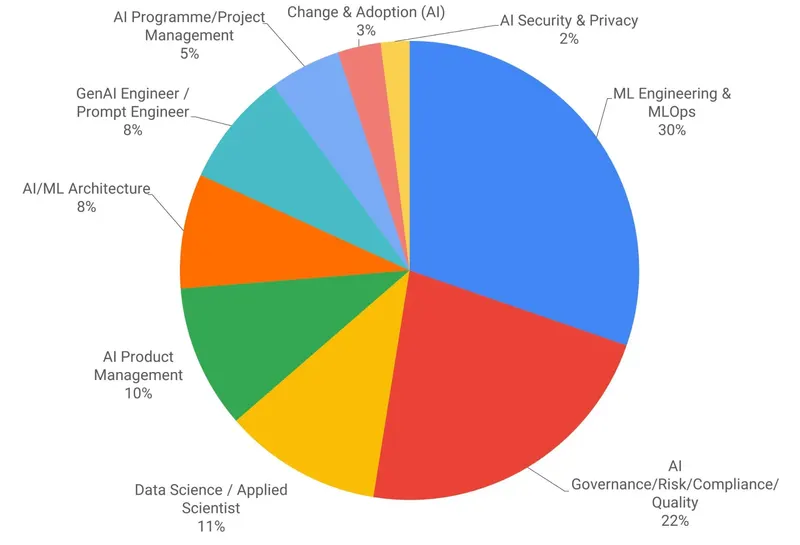
There is also a labour-market signal. A UK report from Equitably found AI governance leading the growth in AI roles through 2025, driven there by the EU AI Act.9 Australia has no equivalent law, so do not import the driver. Import the observation: the roles growing fastest are about judgement and oversight of AI, not building it. That is the shape of a WHS manager’s job already.
Skill 1: Prompt Literacy.
Prompt literacy is knowing how to ask an AI tool for something you can actually use. The difference between a vague request and a specific one is the difference between a generic paragraph and a draft that saves you an hour.
The pattern is the same one you use when you brief a consultant. Say who you are, what you are responsible for, the scale, the jurisdiction, and the shape of the answer you want.
Try this
Instead of 'tell me about WHS compliance', write: 'I am the safety manager for a logistics business in Queensland with 150 contractors across 3 depots. Draft a checklist of the 10 documents I should verify before a contractor’s workers start on site, under the Work Health and Safety Act 2011 (Qld). Put the ones that expire first at the top.'
The second version gets you something to edit. The first gets you something to delete.
Once you can do that, a bigger door opens. ComplyFlow has an MCP server, which lets an assistant such as Claude Code or GitHub Copilot read your own compliance record,10 with a token you scope and that expires.13 The prompt skill is the same, but the question is now 'which contractors on the Brisbane site have insurance expiring this month?' and the answer comes from your live data, not from the internet.
How to build it
Thirty minutes a week, on a real task, for four weeks. Rewrite one request each time until the output is something you would send. Keep the prompts that worked in a note; you will reuse them.
Skill 2: Auditing What AI Gives You.
This one is not optional in safety work, and it has a name in the research: automation bias, the tendency to over-rely on automation and accept its output without checking. A 2012 systematic review in the Journal of the American Medical Informatics Association screened 13,821 papers and examined 74 studies of it. Decision aids improved overall performance, and users still routinely failed to notice the new errors the aid itself introduced.3
The finding that should worry an experienced manager most comes from Parasuraman and Manzey in Human Factors: automation bias shows up in experts as well as novices, and training and instructions alone do not prevent it.4 Knowing about it is not protection. A process is.
AI is genuinely good at reading a 40-page safety management plan and listing what is present, partly present, and missing against your criteria. It is not reliable on jurisdiction-specific nuance, on the conditions of a particular site, or on anything that needs a person to have stood in the room. That is why ComplyFlow’s AI review works the way it does: an agent reads a document against criteria you define and returns feedback, and a person acts on it.11
How to build it
Write the check into the procedure, not into your good intentions. Every AI output that touches a compliance decision gets a named reviewer and a one-line record of what they verified. If an output looks unusually clean and confident, that is the one to read twice.
Skill 3: Reading Your Own Data.
You do not need to be an analyst. You need to know what a number on your dashboard means before you ask a tool to explain it.
The distinction that matters most is the one in Safe Work Australia’s guidance on measuring and reporting. A lagging indicator is reactive: it reports an incident or injury after the failure, such as a lost time injury rate. A leading indicator is active: it checks that a critical control is working before anything fails, such as the proportion of subcontractors inducted before their first shift.5 Traditional safety reporting is almost entirely lagging. AI is at its most useful on the leading side, because that is where the patterns are and where you still have time.
A spike in expiring certifications in one business unit is a workforce planning problem wearing an admin disguise. Induction completion falling at one site three weeks before a shutdown is a leading indicator of exactly the kind of failure you are paid to prevent. A tool can surface both. Only you know which one to act on first.
How to build it
Take one report you already receive. For each figure on it, write down what makes it go up, what makes it go down, and whether it is telling you about the past or the future. Then ask the tool the questions you could not answer.
Skill 4: Deciding What to Automate.
The most valuable thing a compliance manager can do with AI is not to use it. It is to map the week and decide, honestly, which parts should have a human in them.
A large share of compliance work is high volume, rule-based, and low judgement: chasing document renewals, sending induction reminders, checking expiry dates against a requirement, logging what arrived. Systems do that better than people because they do not forget and do not have competing priorities on a Friday afternoon. ComplyFlow’s AI agents can be configured against your own form questions and review criteria, and tested on sample documents before they touch a live one.11 The usage that costs money is metered and included in Enterprise plans, so the question of what to automate is a judgement about risk rather than a budget negotiation.12
The line I would hold is this. Automate the checking and the chasing. Keep every decision about a person’s right to be on a site with a person. That is where the duty sits, and it is where a wrong answer hurts someone.
The regulator’s guidance has a point to add here. When automating a process, Safe Work Australia asks you to design it so that it does not intensify work: workers should still be able to alter the pace, change tasks, and pause.1 Automation that quietly turns a job into a queue is a psychosocial hazard, and the NSW duty on digital work systems is aimed at exactly that.2
How to build it
Write down the five most repetitive tasks in your compliance week. For each, ask two questions: could a well-configured system do this reliably, and does anyone’s safety depend on the judgement in it? Automate the ones that pass both. Start with the easiest.
Skill 5: Governing AI the Way You Govern Risk.
This is the skill the role data points at, and it is the one a WHS manager already has most of.
Australia’s position is now clear enough to describe in a paragraph. The Voluntary AI Safety Standard of September 2024 set out ten guardrails. The National AI Centre has since folded them into six essential practices, in its Guidance for AI Adoption: decide who is accountable, understand impacts and plan, measure and manage risks, share essential information, test and monitor, and maintain human control.6 In December 2025 the National AI Plan chose to govern AI through existing law and sector regulators rather than a new Act, backed by an AI Safety Institute that can test and advise but not compel.7 There is no Australian AI Act, and none is proposed.
Read those six practices again. Accountability, impact assessment, risk management, information sharing, testing and monitoring, human control. That is a safety management system with the nouns changed. If your organisation wants a formal structure, ISO/IEC 42001, published in December 2023, is the management-system standard for AI, built on a plan-do-check-act cycle.8
What that means in practice is that the person in the building best placed to ask the governance questions about a new AI tool is you. Who is accountable if this output is wrong? Does it produce a record an auditor can follow, not just an answer? Can we explain to an inspector how it works and where it fails? Ask those of every tool you are offered, including ours.
How to build it
The next time your organisation adopts an AI tool for anything, volunteer to be the person who runs it through your risk process. Use the six practices as the agenda. You will be the only person in the room who has done this before, because you have done it for every other hazard.
The Short Version.
You do not need a computer science degree to be good at this. You need the things a WHS manager already has: a habit of asking specific questions, a refusal to take an answer on trust, a working knowledge of your own numbers, a clear view of where judgement lives, and a risk process that everything new has to pass through.
The regulator now expects you to apply those to AI. NSW is about to require it. The managers who build these five habits this year will be the people their organisations turn to when the question is no longer whether to use AI, but how to use it without hurting anyone.
Sources
- Digital technologies and AI: WHS duties
- Work Health and Safety Amendment (Digital Work Systems) Act 2026 (NSW)
- Automation bias: a systematic review of frequency, effect mediators, and mitigators
- Complacency and Bias in Human Use of Automation: An Attentional Integration
- Measuring and reporting on work health and safety
- Guidance for AI Adoption
- National AI Plan
- ISO/IEC 42001:2023 Information technology, Artificial intelligence, Management system
- 7 Key AI Roles & AI Skills You Must Know, Q3 2025 AI Skills Report
- Connecting ComplyFlow to Claude Code or GitHub Copilot
- Quick Start Guide: Selecting and Configuring an AI Agent for Form Questions
- AI Usage is now included in our Enterprise Plans
- Creating an API Token and Managing Scopes
See It Against Your Own Contractors, Sites & Rules.
Book a 30-minute demo. We will show ComplyFlow working with your kind of sites, your kind of contractors, and your requirements. No slides, no hard sell.
Or Speak to Us
- ISO 27001
- Hosted on AWS
- Microsoft & Okta SSO
- API & MCP
- Data in Australia
Written by
John McCannHead of Product, ComplyFlow
John has led ComplyFlow’s product since 2021, including its AI document review, its AI agents, and its MCP server. He writes about what AI can and cannot be trusted to do in safety and compliance work, from building it.
Writes about: AI in compliance, Product and integrations, Data and reporting
Questions
Questions People Ask About This.
Do I need to learn to code to use AI in WHS work?
No. None of the five skills involves writing code. They are habits of asking well, checking carefully, reading your own data, choosing what to hand to a system, and keeping accountability clear. A safety manager already has the judgement; the skills are about applying it to a new kind of tool.
Is using AI at work a WHS duty in Australia?
Managing the risks from it is. Safe Work Australia’s guidance, added in July 2026, says a person conducting a business or undertaking must manage health and safety risks from AI and digital technologies as they would any other hazard. NSW has also passed a specific duty covering work allocated by a digital work system, which commences on proclamation.
What is automation bias?
The tendency to over-rely on automation and accept its output without checking it. A 2012 systematic review in the Journal of the American Medical Informatics Association found it across 74 studies, and earlier work in Human Factors found it occurs in experts as well as novices and is not prevented by training alone. In safety work, the check is the job.
Does Australia have an AI law?
Not a dedicated one. The Voluntary AI Safety Standard of September 2024 was folded into six practices in the National AI Centre’s Guidance for AI Adoption, published 5 May 2026, and the National AI Plan of December 2025 chose to govern AI through existing law and sector regulators rather than a new Act. The WHS duties above are where the binding obligations sit for a safety manager.